
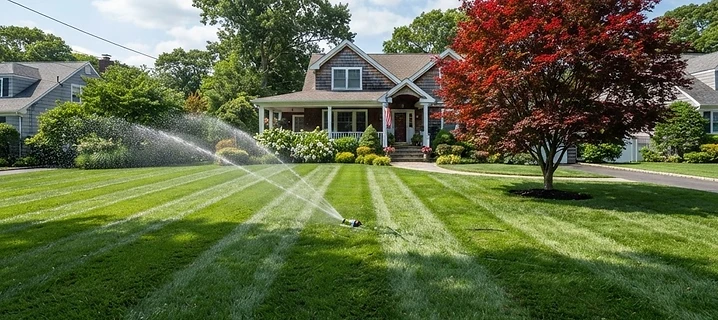
Why a Calendar Beats Guesswork
Long Island's climate gives us four distinct growing seasons, and your lawn responds differently to each one. Treat your yard the same way all year and you'll either overwork it in summer or neglect it in winter. A month-by-month plan keeps the grass healthy, the soil balanced, and the weeds in check — without spending every weekend on it.
March–April: Wake the Lawn Up
As the ground thaws in Nassau and Suffolk, your first jobs are cleanup and prevention.
- Rake out debris — leaves, twigs, and dead grass that matted down over winter. This lets air and sunlight reach the soil.
- Test your soil pH — Long Island lawns often run acidic. A reading below 6.0 means it's time to add lime.
- Apply pre-emergent crabgrass control when forsythia bushes start to bloom — that's your natural signal, not the calendar.
- Hold off on fertilizing until the grass is actively growing. Feeding too early feeds the weeds instead.
May–June: Growing Season
This is when the lawn does its heaviest lifting.
- Fertilize with a slow-release nitrogen blend around Memorial Day.
- Mow high — set your blade to 3–3.5 inches. Taller grass shades out weeds and develops deeper roots.
- Spot-treat weeds rather than blanketing the whole yard. A targeted spray saves money and protects pollinators.
- Check for grubs if you see patches of dying grass that lift like loose carpet. Late spring is when grub damage first shows.
July–August: Heat Survival
Long Island summers can stretch into weeks of 90°+ days. Your goal here is to keep the lawn alive, not make it lush.
- Water deeply and infrequently — one inch per week, ideally in the early morning (5–8 a.m.) to limit evaporation and disease.
- Skip fertilizing in the heat. Feeding stressed grass can burn it.
- Raise the mower blade another half-inch to reduce heat stress.
- Let the clippings lie — they return moisture and nitrogen to the soil.
September–October: The Most Important Window
Fall is the best time to repair a Long Island lawn. The soil is warm, the air is cool, and weeds are winding down.
- Aerate compacted areas — especially high-traffic zones near walkways. Core aeration relieves compaction and lets nutrients reach the roots.
- Overseed thin or bare spots. Early-to-mid September gives new grass time to establish before frost.
- Apply a fall fertilizer high in potassium to strengthen roots for winter.
- Topdress thin areas with a thin layer of compost to improve soil structure.
November–February: Rest and Protect
- Keep mowing until the grass stops growing — usually mid-November. A final short cut (2.5 inches) prevents snow mold.
- Clear leaves off the lawn — a matted leaf layer smothers grass and invites disease.
- Stay off frozen or soggy turf — foot traffic on frozen grass snaps the crowns and leaves dead trails come spring.
The Bottom Line
You don't need a perfect lawn — you need a timed one. Do the right thing in the right month and the yard largely takes care of itself.