
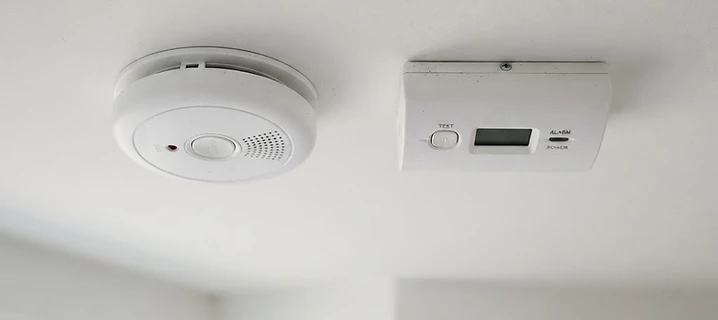
Why This Matters More Than You Think
Smoke alarms cut your risk of dying in a home fire roughly in half. Carbon monoxide (CO) detectors catch a poison you can't see or smell. Yet most homeowners only think about these devices when they chirp at 3 a.m. — or worse, after an emergency. The good news: a reliable routine takes less than a minute a month.
The Monthly Test (60 Seconds)
On the first of every month — or any day you'll remember — walk to each detector and:
- Press and hold the test button until the alarm sounds.
- Confirm the sound is loud and clear — not weak or intermittent.
- Check that interconnected alarms all sound together (if your home has them).
- Note any unit that didn't respond and replace its battery immediately.
If a unit fails to sound even with a fresh battery, replace the entire detector — the sensor is likely dead.
The Biannual Battery Swap
Twice a year, when you change your clocks for daylight saving time, swap every detector's battery — even if it's still working. This builds a buffer so you're never caught off guard by a dead battery in a real emergency.
- Use fresh, name-brand alkaline batteries — not the half-used ones from the remote.
- For 10-year sealed lithium detectors, you don't change the battery — but you still test monthly and replace the whole unit when it reaches 10 years.
Know the Expiration Date
Detectors don't last forever. Sensors degrade over time, even if the test button still works.
- Smoke alarms: replace every 10 years from the manufacture date (printed on the back).
- CO detectors: replace every 5–7 years — they have a shorter sensor life.
- When you install a new unit, write the install date on the back with a marker so you'll know when it's due.
Placement Checklist
- One in every bedroom and outside each sleeping area.
- At least one on every level, including the basement.
- CO detectors near sleeping areas and on each floor with fuel-burning appliances.
- Never in the kitchen or within 10 feet of a bathroom — steam and cooking smoke cause false alarms and lead people to disable them.
The 60-Second Habit That Saves Lives
Set a monthly phone reminder. Test, confirm, move on. It's the cheapest insurance you'll ever buy.