
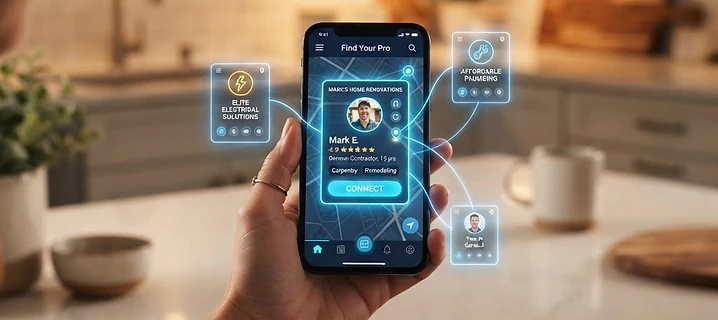
What AI matching does well
AI is genuinely good at one thing in the contractor space: sorting through large amounts of data to surface relevant matches. When you post a project — say, a roof replacement in Smithtown — a matching system can quickly scan contractor profiles, trade categories, service areas, and availability to identify pros who plausibly fit your job.
That's useful. It saves you from scrolling through dozens of irrelevant listings or cold-calling contractors who don't serve your area. On SideKick, the matching system considers your project's trade category, location, and timeline to connect you with contractors who've indicated they do that kind of work in your region.
But matching is a starting point, not a finish line.
What AI can't verify
No AI system — no matter how sophisticated — can verify the things that actually matter most:
- Whether a contractor's license is currently valid. AI can read a license number from an uploaded document, but confirming it's active, in good standing, and covers the scope of your project requires checking with the issuing authority.
- Whether a contractor's insurance is adequate for your job. A certificate of insurance shows coverage limits and dates, but whether those limits are sufficient for a $50,000 roof replacement is a judgment call no algorithm makes for you.
- Whether the contractor will actually do good work. Reviews and ratings are signals, but they're not guarantees. A contractor with a 4.8-star average can still do a poor job on your specific project.
- Whether the contractor is financially stable. AI can't tell you if a contractor is behind on their own bills, has liens against them, or is about to go out of business.
The verification steps AI can't replace
Here's what you should still do, no matter how smart the matching system is:
1. Verify credentials independently
If a contractor claims to be licensed, get the license number and check it with the issuing authority — whether that's New York State, your town, or your county. On SideKick, a License Reviewed badge means a document was uploaded and reviewed, but you should still confirm the license is active for your specific project scope.
2. Request a Certificate of Insurance
Ask the contractor's insurance broker to email you a COI naming you as the certificate holder. Confirm the coverage limits and that the policy doesn't expire before your project is scheduled to finish.
3. Check references for similar work
Ask for references from homeowners who had similar projects done — not just any past client. A contractor who excels at kitchen remodels may not be your best choice for a roof replacement.
4. Get everything in writing
A detailed written estimate, a clear scope of work, and a payment schedule tied to milestones protect you in ways no matching algorithm can. Never pay the full cost upfront.
5. Trust the conversation
When you message a contractor through SideKick or meet them in person, pay attention to how they communicate. Do they answer questions clearly? Do they show up on time? Do they pressure you? AI can match you to a contractor, but only you can decide whether you trust them in your home.
Where AI and verification work together
The ideal workflow isn't AI or verification — it's both. Use AI matching to efficiently identify a shortlist of contractors who fit your project's trade and location. Then apply your own verification process to that shortlist: check licenses, request insurance certificates, read reviews critically, and have real conversations.
On SideKick, the platform does part of this for you by surfacing credential review badges and contractor ratings. But the final judgment — the decision to let someone work on your home — is always yours.
The bottom line
AI matching is a time-saver, not a trust mechanism. It narrows the field so you can focus your verification effort on the right candidates instead of starting from scratch. Use it for that. Then do the work that no algorithm can do for you: verify, ask questions, and trust your own judgment before you sign anything.